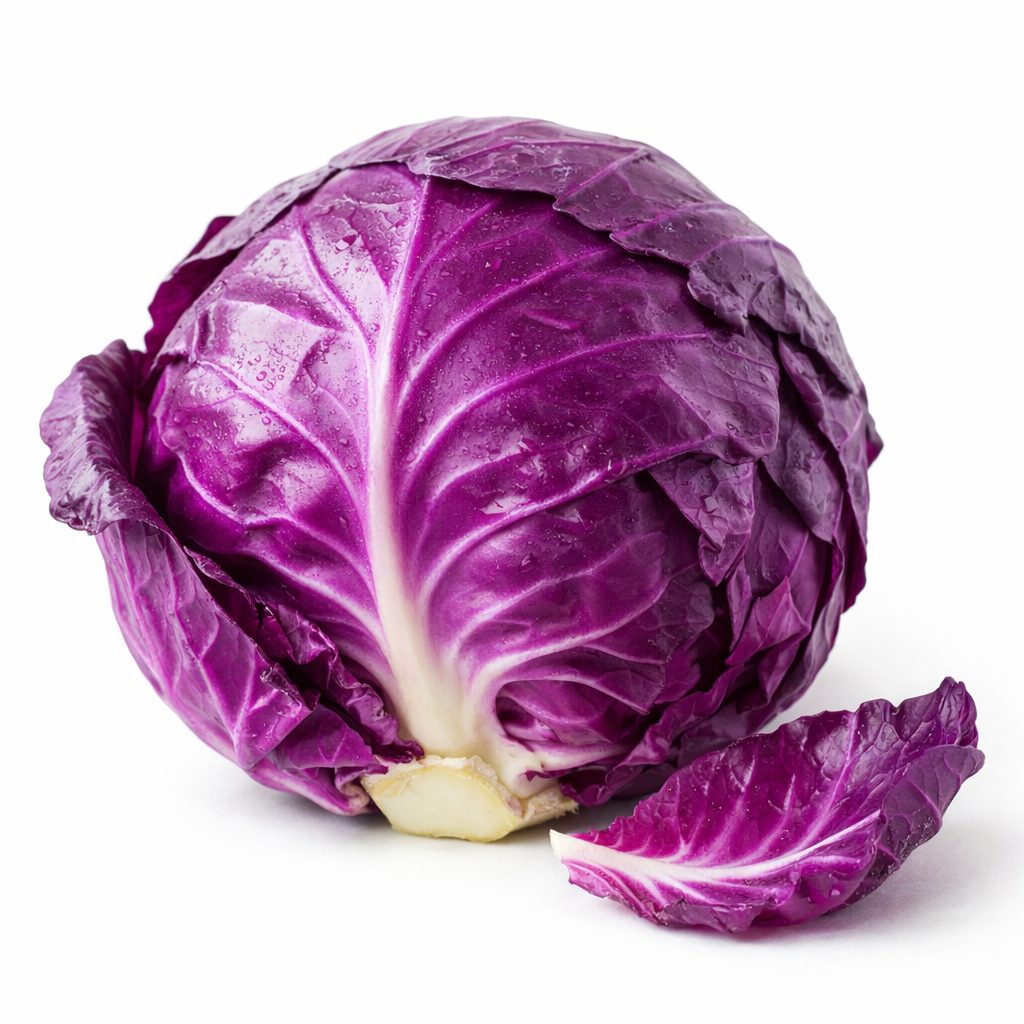
Bandh gobi
Brassica oleracea var. capitata f. rubra
Also known as: Bondhakobi, Badha kopi, Red cabbage, Purple cabbage, Red Kraut, Blur kraut, Lal kobi, Kosu, Kubi saw
Violet cabbage is an edible leafy vegetable known for its distinctive deep purple color. It is commonly cooked and used in Indian and global cuisines, providing notable amounts of vitamin K and vitamin C.
% DV = % Daily Value (adult RDA, ICMR 2020). Values per 100g edible portion.
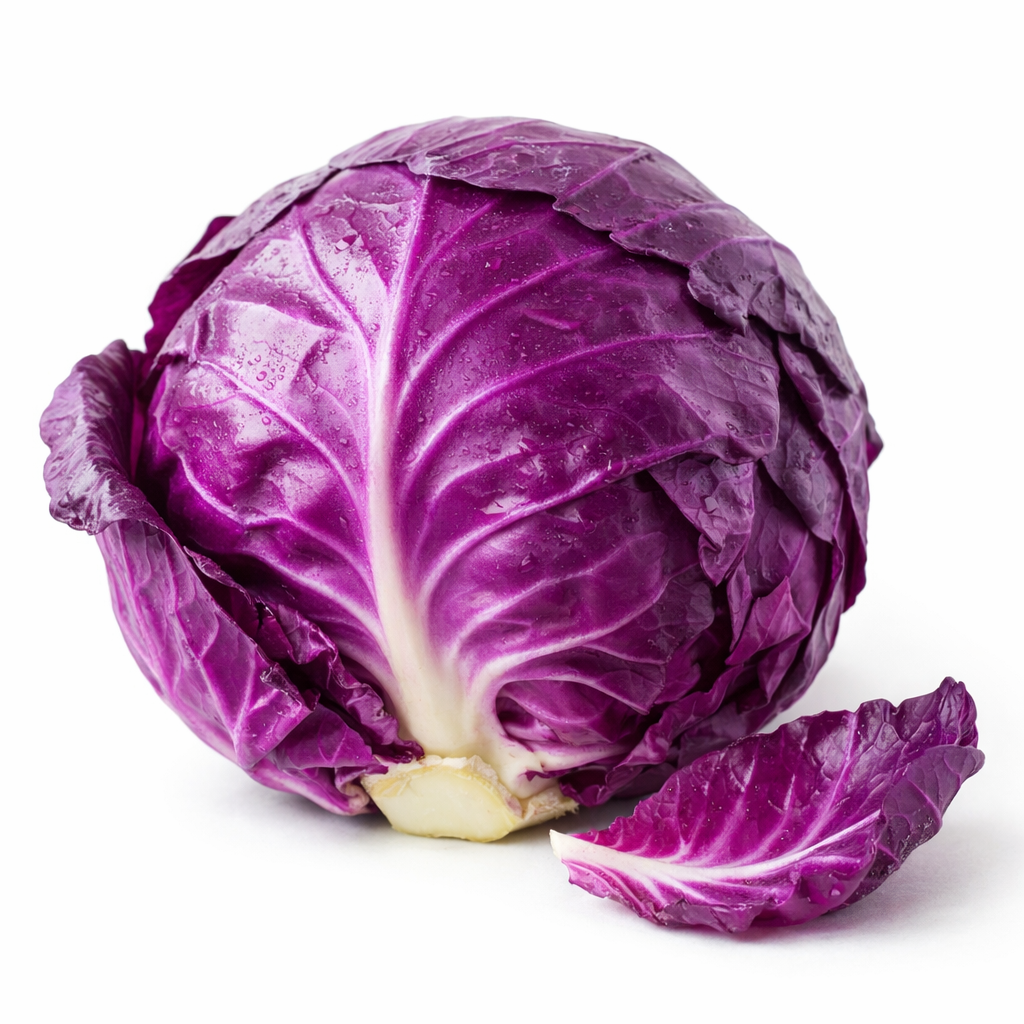
Violet cabbage, also known as purple cabbage, is a variety of cabbage with a vibrant purple hue. Widely used in salads, stir-fries, and Indian vegetable dishes, it is cooked or eaten raw. The distinctive color comes from anthocyanins, which are antioxidants but are not included in the current nutrient claims.
This vegetable is especially noted for being rich in vitamin K and a good source of vitamin C, which are essential nutrients involved in blood clotting and immune system function respectively. Other nutrients such as iron, calcium, and potassium are present in modest amounts.
Violet cabbage is a vegan food and fits well into balanced diets. Its low energy and fat content make it suitable for various meal types, complementing lentils, grains, and proteins in Indian meals. When selecting cabbage, choose firm heads with bright color and crisp leaves.
9,000+ Indian foods with real-time nutrient tracking, AI generation, and WhatsApp sharing.
Start FreeFree plan · No credit card
Values per 100g edible portion.
Nutrition data is for reference only. Values may vary by preparation method, brand, and region. Full disclaimer
Green cabbage
Bandh gobi
Brussels sprouts
Choote gobi
Collard greens cabbage
Chinese cabbage
Leaves knol-khol
Ganth gobi ka sag
Cauliflower leaves
Phul gobi patta
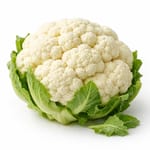
Cauliflower
Phul gobi
Knol - Khol
Kohl-rabi